How Close Is Close Enough? Using GIS and Explainable AI to Plan Better Neighborhoods for Families
Date and Time
Location
Presentation by Kyujin Choi, PhD student in Architecture at Yonsei University, and visiting PhD student at MIT Senseable City Lab
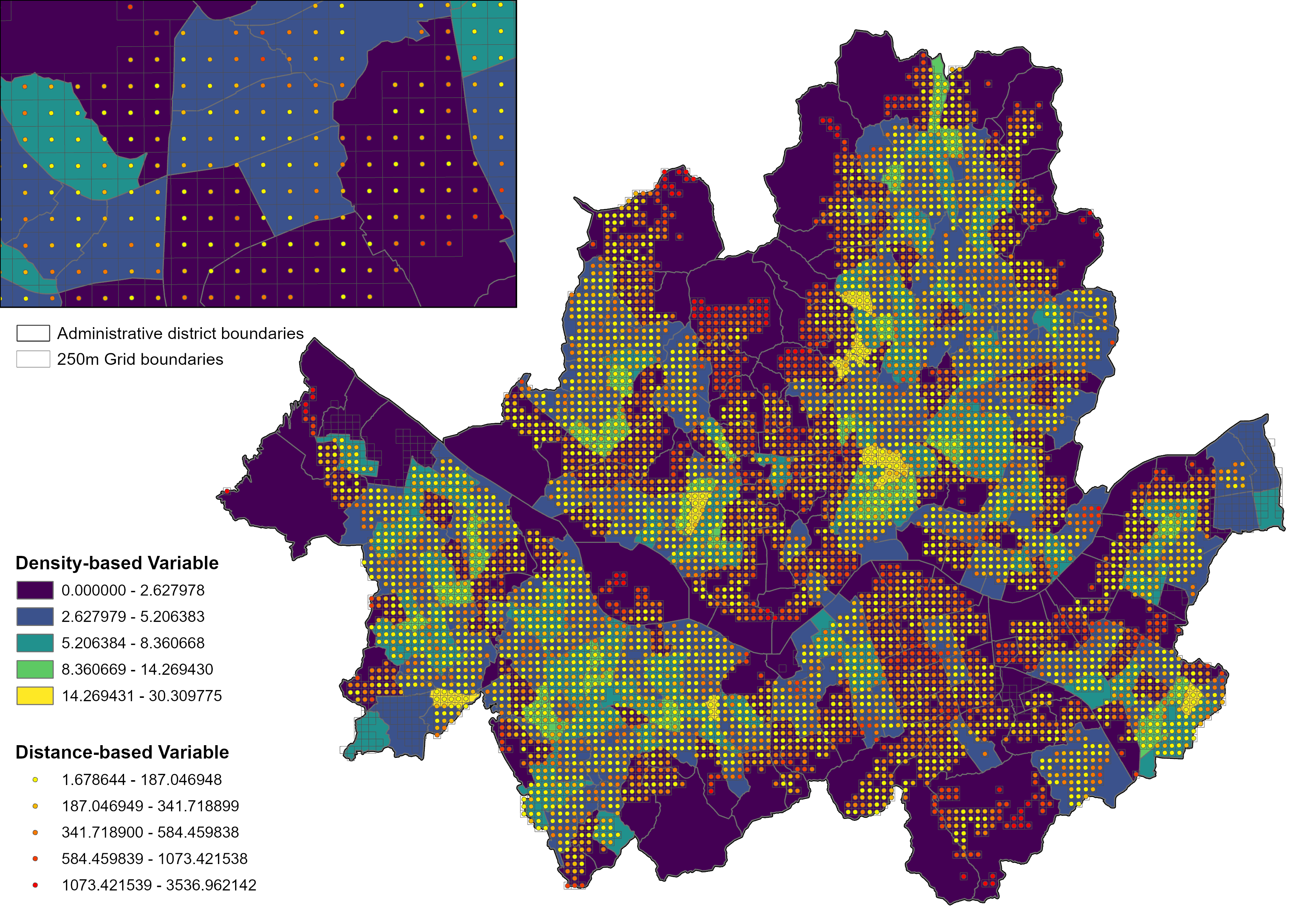
Abstract: The 15-minute city has gained widespread attention as an urban planning concept for creating more accessible and livable neighborhoods. But is a single accessibility standard sufficient for planning environments that support people's everyday lives? How close should essential services actually be, and does the answer vary across different places? While traditional spatial analyses often focus on the number or density of urban facilities, such measures offer limited guidance on how residential environments should be planned. This talk explores how GIS and explainable AI can move beyond identifying spatial patterns toward generating more actionable, evidence-based planning insights. Using Seoul's low fertility as a case study, the research examines how access to childcare, education, healthcare, transportation, and other neighborhood services relates to birth patterns across 5,523 fine-grained spatial units. By integrating network-based accessibility analysis, machine learning, and spatial regression, the study identifies nonlinear distance thresholds and geographic variations in these relationships. The findings reveal how the relationships between access to urban services and birth patterns vary across distances and neighborhoods, highlighting potential inequalities in access to family-supportive residential environments. These results raise important questions about the equitable distribution of essential services. More broadly, this talk discusses how geospatial analytics can help translate complex relationships between the built environment and human outcomes into practical evidence for more context-sensitive, human-centered architectural and urban planning.
Speaker bio: Kyujin Choi is a Ph.D. student in Architecture at Yonsei University and a visiting student at the MIT Senseable City Lab. Her research lies at the intersection of architecture, urban environments, and human behavior. Leveraging GIS, visual AI, and machine learning, she examines the relationships between the built environment and human behavior, with a focus on translating spatial and behavioral insights into actionable, evidence-based strategies for architectural design and urban planning.